01786 841202
 FREE UK tracked delivery
 Order by 12pm Mon-Fri for same day dispatch


Winter gear essentials
by Nigel Williams
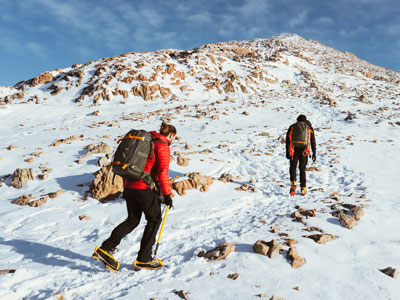
A more serious example is crampons do not match the flexibility of the boot sole or not being correctly adjusted to fit the boots. Adjusting them on the hill often leads to delays and cold hands which then make using a compass difficult. A crampon coming off on a hard snow slope can lead to an unexpected slide possibly made worse if walking with poles rather than an ice axe in the uphill hand which could be used to brake the slide.
The importance of decisions around equipment regularly come up in mountain rescue cases. Our choice of footwear and whether we carry crampons and the quality and compatibility of those items can lead to changes of plan and route decisions requiring more complex navigation skills and confidence. On the rare occasions when we experience an epic in the hills it can often be traced back to something that seemed quite innocuous at the time but which leads to something else going awry and so on. The "Swiss cheese" scenario in risk management.
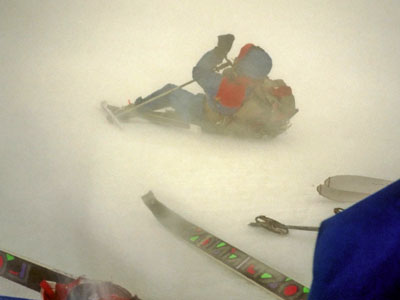
Whilst the team huddled together lying on the remaining skis two of us went to see if we could find it without success. We had an ice axe each but that was not sufficient to enable us to crawl our way into the wind to rejoin the group who were getting very cold. We needed our crampons on (strap-ons in those days) but being semi rigid designed for climbing they initially came off the flexible sole of the ski boot. Wrong crampons for the boot. In the end we managed to extricate ourselves and some 10 years later the ski turned up.
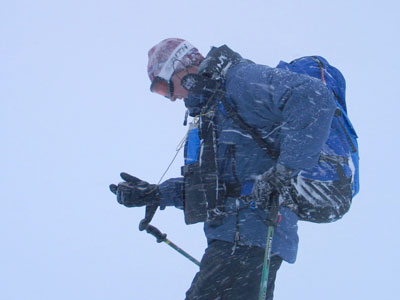
Lightweight may be appealing but when needed in anger it can let us down with potentially serious consequences. I have had the adze of a lightweight ice axe buckle and fold whilst trying to chop out a few steps across some ice.
I had a pair of superlight carbon walking poles - crossing a stream in spate, facing up stream and leaning on them for support, the force of the water and my weight snapped them both and in a split second I got swept downstream. It was a near death experience, it was January and night time and the culmination of a load of minor issues and decisions throughout the day. The Swiss cheese holes suddenly all aligned. Others in the group all crossed safely with standard metal poles.
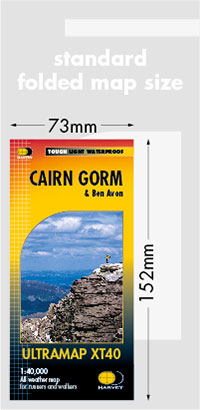
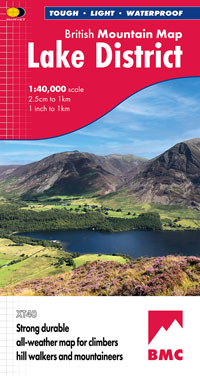
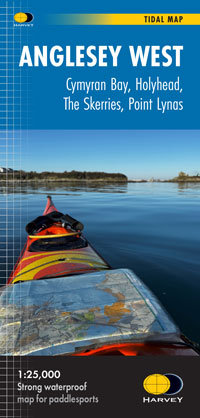
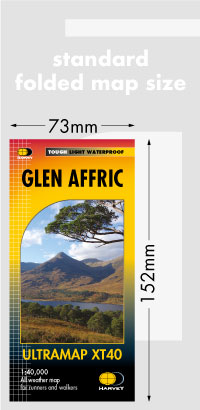
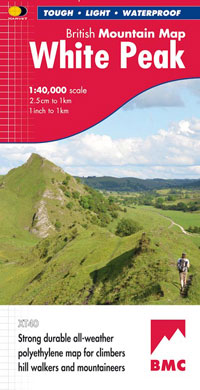
Gloves, hats and maps, are easily blown away or become soaked, multiple spares are essential. Map cases strung around your neck are ok in fine weather but can be challenging in high winds, it is much easier to manage a map if it can be folded small to the area you need. Some of that is dependent on the scale, 1:25,000 scale is too bulky and likely to require refolding during the day, they have too much confusing detail much of which will be irrelevant with snow cover. The HARVEY British Mountain Maps at 1:40,000 scale are ideal as they offer more contour information including height colouring which are key pieces of information for winter navigation. The HARVEY Ultramap series, also at 1:40,000 scale, has the benefits of being less bulky, easy to fold and enables easier use of a compass on it. If the tools of navigation are not easy to use and accessible the tendency is to ignore their use until it's too late.
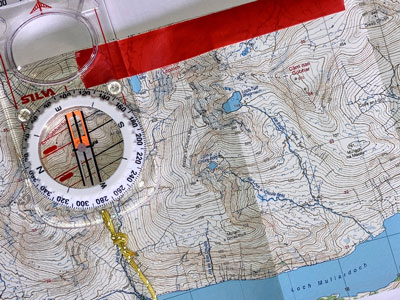
Being equipped to navigate in poor conditions means having more than one paper map and compass either as an individual or in the group. Phones/GPS are extremely useful additional tools and a back-up power pack should be seen as essential. It isn't just using the phone that drains the battery but the cold alone will do it extremely quickly so it actually needs to be on airplane mode and kept in an inside warm pocket. It also needs to be well away from the compass so as not to deflect the magnetic needle or, even worse, cause the needle to change polarity if they end up rubbing together in a pocket.
Finally, when things get serious in winter, none of the navigational equipment is any good without ski goggles and a head torch to enable the tools to be read.
- If you are in need of a compass then we stock a great range of items and other useful navigation equipment, suitable for all levels of navigation.
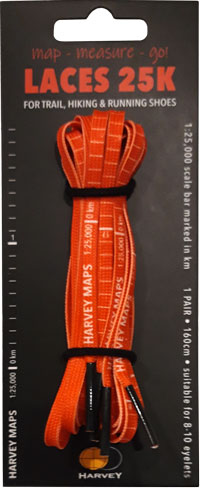
- For the perfect lanyard to go with your compass, the HARVEY Map - Measure - Go! scale bar laces double up to make measuring distance easy! Available in two scales, 1:25,000 scale markings (red) and 1:40,000 scale markings (yellow).
Return to the Navigation Blog